How to find your size in vintage clothes
A size 14 from the 1970s can fit like a modern 10. Here's how to work out what will actually fit you, with a tape measure and a few minutes.
2 min read
"I'm a 12, but this 12 won't do up." If that has ever happened to you in a vintage shop, it isn't you. Clothing sizes in the UK have changed a lot over the last fifty years, so the number on an old label is only a rough guide. Here's how to find your size in vintage without the guesswork.
Why the labels don't match
Over the decades, high street sizes have crept up: a modern size 12 is cut bigger than a 12 was in the 1960s or 70s. That means older pieces often come up small for the number on the label, sometimes by two sizes or more. Pieces made abroad, or made at home from a pattern, may use a different system altogether, or have no size at all.
So treat the label as a starting point, and trust the tape measure.
Know your own measurements
Take three measurements and keep them in your phone:
- Bust: around the fullest part, keeping the tape level.
- Waist: around the narrowest part, usually just above your belly button.
- Hips: around the fullest part of your hips and bottom.
For trousers and skirts, add the length from your waist to where you like the hem to sit. For jackets and coats, measure across your shoulders from one shoulder seam to the other on something that already fits you well.
Measure the clothes, not just you
A good trick is to measure something you already own and love the fit of. Lay it flat, measure across the chest from armpit to armpit (sellers call this "pit to pit"), then double it. Do the same at the waist. Now you know the numbers to look for, whatever the label says.
Remember to leave room to move. Woven fabrics like cotton, wool and polyester from the 70s have no stretch at all, so a dress that measures exactly your bust size will feel tight. Knits are more forgiving.
Try it on if you can
Nothing beats trying it on. Sit down in it, lift your arms, and check the fit across your shoulders and back. Old zips are often metal and less forgiving than modern ones, so do them up gently.
When the fit is nearly right
Don't walk away from a piece you love just because it's a bit long or a bit loose. Taking up a hem or nipping in a waist is a simple job for a local alterations shop. Letting things out is harder, because there's often not much spare fabric in the seams, so if you're between sizes, go for the bigger one.
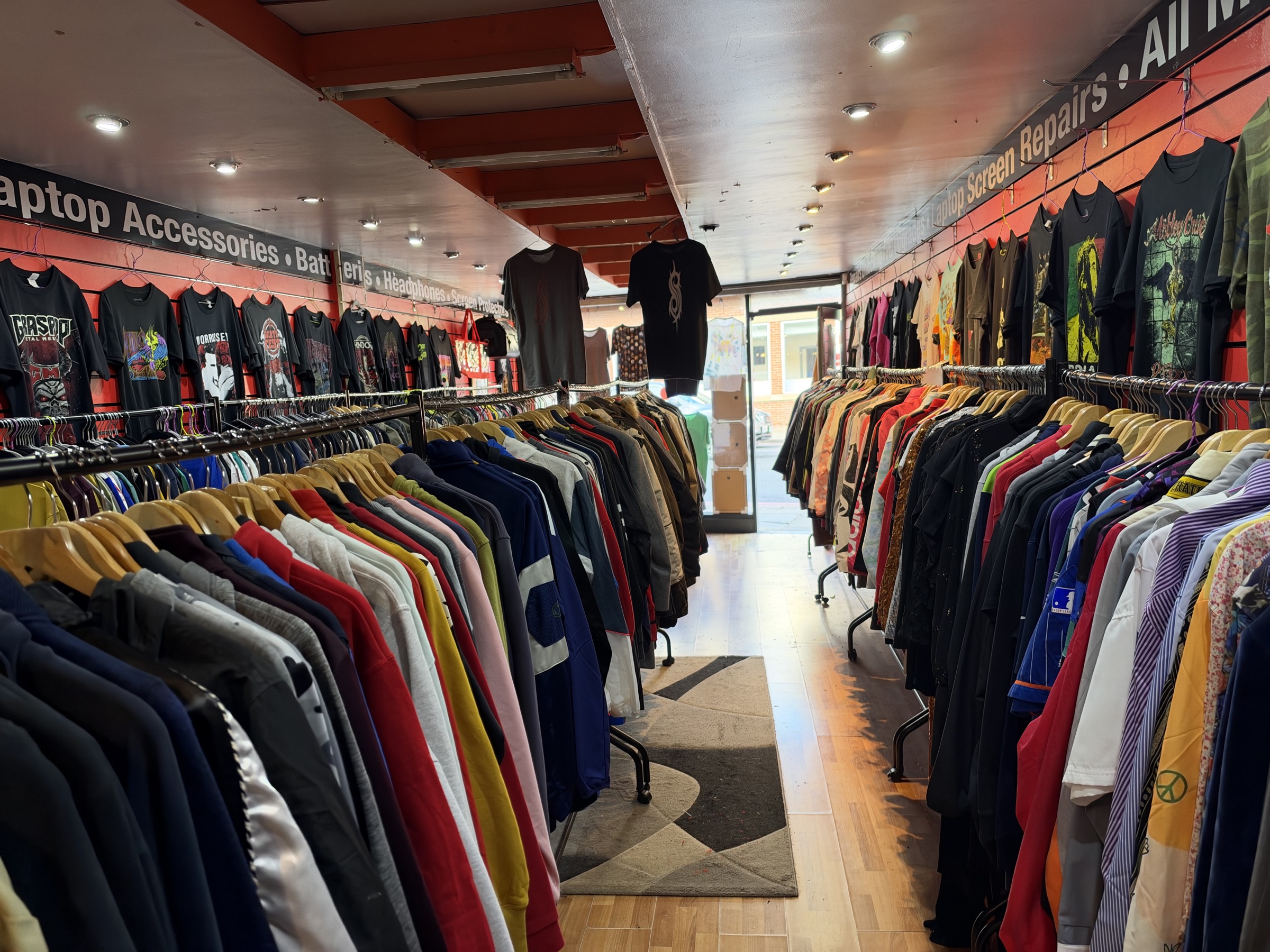
Everything on our rails is one of a kind, so the only way to know is to come in and try it. Bring your measurements, or just bring yourself.